 Loma Ranchito
The Place
A hill with a name and a history
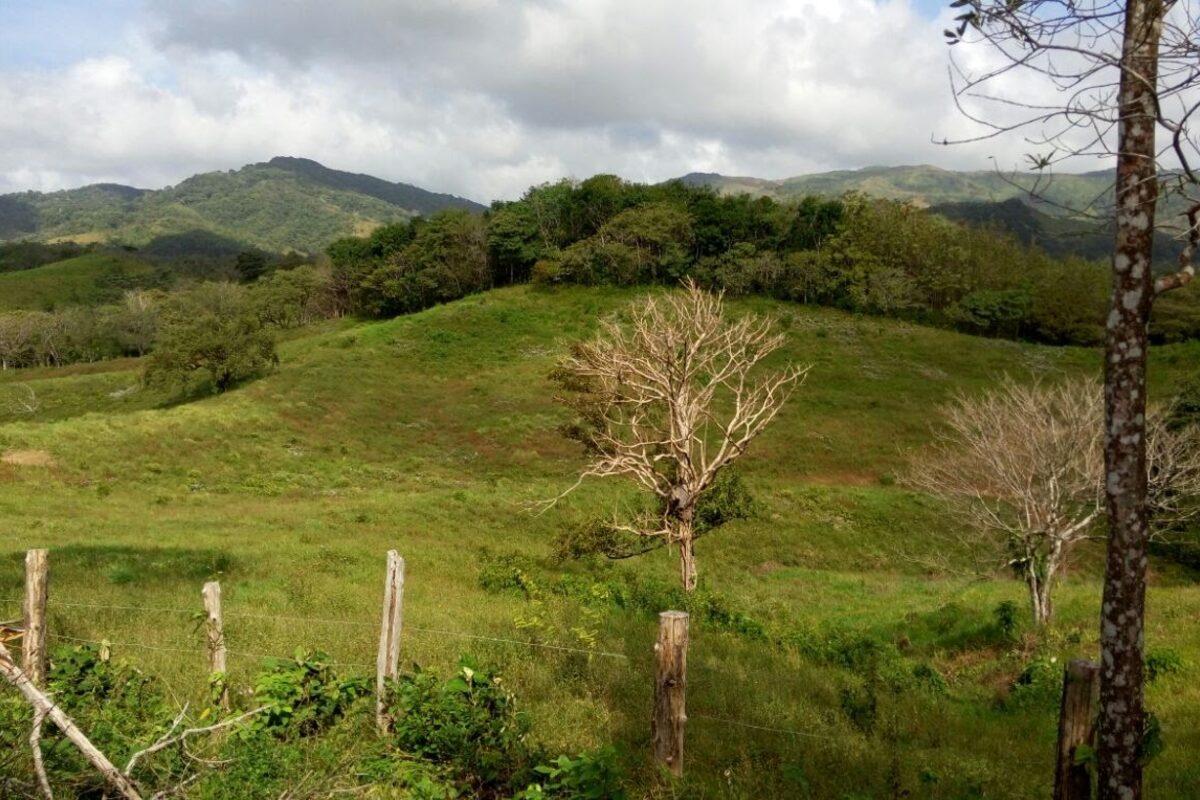
Loma Ranchito — roughly, "little ranch hill" — sits at about 612 meters above sea level in the uplands of western Herrera Province, where the flat, sun-baked plain of the Azuero Peninsula finally buckles into forested ridges. Up here the air is noticeably cooler than in Chitré, clouds snag on the hilltops in the wet season, and the views run for miles across a quilt of pasture, forest patches, and winding gravel roads.
Like most communities in these hills, it is small: a scattering of houses along the road, a chapel, a school, a community water system, and the fincas — family farms — that give the place its reason for being. There is no hotel, no restaurant row, no souvenir stand. What there is instead is a working example of the rural Panama that shaped the whole Azuero region's identity.
Daily life on the loma
Days start early. Cattle are the backbone of the highland economy — most families raise a few head for milk, cheese, or sale — alongside plots of maize, beans, yuca, and plantain, with coffee bushes and citrus trees in the cooler hollows. Much of the work is still done by hand or on horseback, and it is common to see a saddled horse tied outside a house the way a pickup truck might be parked elsewhere.
Water comes from community aqueducts fed by hillside springs; the men of the community maintain the lines together, a small everyday example of the cooperative tradition — the junta — that runs deep in Azuero's countryside. When a family needs a big job done, whether harvesting rice or raising the mud walls of a house, neighbors converge, the host feeds everyone, and work becomes something close to a party.
The two seasons
Panama's interior lives by two seasons, not four. Verano — the dry season, from mid-December to April — turns the lowlands golden brown, but the highlands hold their green longer. It is the season of festivals, weddings, and visits from relatives working in the city. Invierno, the rainy season, runs May through November: mornings are often bright, afternoons bring dramatic downpours, and the hills glow an almost impossible green. Farmers plant by these rhythms, and so do the region's festivals.
Between forest and plain
The community's western horizon rises toward the El Montuoso Forest Reserve, one of the last large stands of highland forest on the peninsula and the headwaters of the La Villa River — the river that eventually waters Chitré and the coastal plain. That closeness to the forest shapes life here: cooler nights, reliable springs, hummingbirds and tanagers in the yard, and the occasional agouti raiding a maize field.
Downhill to the east, the land opens into the rolling cattle country of central Herrera and, eventually, the hot plain around the provincial capital. The contrast is part of what makes a visit worthwhile — in under an hour you pass from misty ridge to dry tropical coast, one of the sharpest ecological transitions in Panama.
Why this site exists
Places like Loma Ranchito rarely make it onto the internet at all, let alone in English. This site grew out of a personal connection to the community and a simple idea: that the "in-between" Panama — the Panama of hill farms, patron-saint festivals, and hand-patted tortillas — deserves to be findable. From here, the rest of the site widens the lens to the province and peninsula around the hill. Start with Herrera Province, or jump straight to the festival calendar that rules the region's year.